Showing posts with label Dr. Watson. Show all posts

Friday, April 12, 2024

Crossover Cover: Occult Detective Monster Hunter: A Grimoire of Eldritch Inquests


Are you a fan of occult detective stories?

Then you'll love this anthology, which has stories in which Joel Jenkins' character Lone Crow meets Sherlock Holmes and Dr. Watson and Anton Zarnak encounters what appears to be Robert Blake from Lovecraft's "The Haunter of the Dark," among other crossovers!

For more information, be sure to purchase my book Crossovers Expanded: A Secret Chronology of the World Volume 3, coming this summer from Meteor House! All three volumes are AUTHORIZED companions to Win Scott Eckert's Crossovers: A Secret Chronology of the World Volumes 1 and 2!

Thursday, March 30, 2023

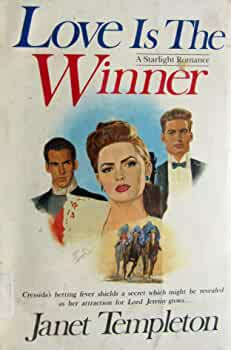
Crossover Cover: Love is the Winner


Are you a Sherlock Holmes fan?

Then you may enjoy this romance novel, which has appearances by not only Holmes and Watson, but also a character from Oscar Wilde's The Importance of Being Earnest!

For more details, see my book Crossovers Expanded: A Secret Chronology of the World Volume 3! Much like the first two volumes, this latest edition is an AUTHORIZED companion to Crossovers: A Secret Chronology of the World Volumes 1 and 2 by Win Scott Eckert!

Tuesday, June 7, 2016

Crossover Cover: The Albino's Treasure

Sherlock Holmes and Dr. Watson attempt to prevent two rival criminal masterminds, Zenith the Albino and the Chinese Lord of Strange Deaths, from getting their respective hands on a mysterious but precious item called “England’s Treasure.” Donald Petrie is the Secretary of the National Portrait Gallery. Zenith the Albino is one of Sexton Blake’s greatest foes. Although Zenith first battled Blake in a 1913 story, this novel demonstrates that he was already active well before then. “The Lord of Strange Deaths” is one of Fu Manchu’s appellations. Donald Petrie may be a relative of Dr. Petrie from the Fu Manchu novels.

For write-ups of this and many, many, many more crossovers, check out Crossovers Expanded Vols. 1 and 2, my AUTHORIZED companions to Crossovers: A Secret Chronology of the World Vols. 1 and 2 by Win Scott Eckert, coming out from Meteor House in July!


Sunday, May 15, 2016

Crossover of the Week

2012
THE IDES OF MARS
Martin Mystère finds himself in a holographic representation of Mars, where he is greeted by Colonel Bozzo and the Marchef. Bozzo is the head of the criminal organization once called the Brotherhood of Mercy or the Black Coats, now known as BlackSpear Holdings. Meanwhile, in Los Angeles, the Nyctalope prepares to do battle with the last survivor of the evil Martians he destroyed decades ago. Bozzo tells Martin some of the Martians’ technology was acquired by Kiang-Ho of the Golden Belt, who was defeated by Rama Rundjee, alias Doctor Mystère, after whom Martin was named. He also says Jean de La Hire was the Nyctalope’s biographer, just as Watson was Holmes,’ Ponson du Terrail was Rocambole’s, Burroughs was Greystoke’s, and Féval was Bozzo’s own. Bozzo knew Martin’s ancestor Remy d’Arx very well.
Short story by Jean-Marc Lofficier in Night of the Nyctalope, Jean-Marc and Randy Lofficier, eds., Black Coat Press, 2012; reprinted in French in La Nuit du Nyctalope, Jean-Marc and Randy Lofficier, eds., Rivière Blanche, 2012. Martin Mystère’s exploits have been portrayed in comics by Alfredo Castelli. Colonel Bozzo (aka Colonel Bozzo-Corona), the Marchef, the Black Coats, and Remy d’Arx appear in a series of novels by Paul Féval. BlackSpear Holdings, the present-day incarnation of the Black Coats, also appears in Castelli and Lofficier’s graphic novel The Treasure of the Veste Nere and Lofficier’s novel The Katrina Protocol. The Nyctalope was the hero of French pulp stories by Jean de La Hire. Kiang-Ho of the Golden Belt is the archenemy of Philip Reade’s dime novel boy inventor (or “Edisonade”) Tom Edison Jr. Doctor Mystère’s adventures were recounted by Paul d’Ivoi; Castelli has established the Doctor’s adopted son Cigale is Martin Mystère’s great-great-grandfather.

Monday, February 22, 2016

Crossover Cover: The Secret Casebook of Simon Feximal

This collection features occult detective Simon Feximal and his biographer and lover, Robert Caldwell. In "The Caldwell Ghost," Feximal says the Third Line of the Saaamaaa Ritual, on which he and his fellow ghost-hunter Carnacki had done such perilous research. The Saaamaa Ritual and Carnacki are from William Hope Hodgson’s Carnacki the Ghost-Finder. In "Remember, Remember," Mr. Lownie, editor of the Chronicle, tells Caldwell that Feximal is at Hartley House "with Miss Kay and Dr. Berry. Carnacki’s in Ireland chasing some haunting, else he’d be there too, I hear." According to Robert, "that list encompassed the best-known ghost-hunters in England, with the exception of the reclusive Dr. Silence." Dr. Silence is the title character of Algernon Blackwood's collection John Silence. In "Devils on Horseback," Feximal is a member of the Diogenes Club, to which he had been nominated by one of his more peculiar acquaintances, a Government man whose intellectual capacity is matched only by his corpulence. Both Simon and Caldwell are members of a club called the Remnant, whose members include Dr. Silence, Thomas Carnacki, and Dr. Nikola. The Diogenes Club and the corpulent Government man (Mycroft Holmes) are from the Sherlock Holmes stories. Nikola is a supervillain created by Guy Boothby. In "The Writing on the Wall," Feximal and Caldwell encounter the occultist Karswell. Dr. Silence appears, and the Saaamaaa Ritual and John Watson are mentioned. Karswell is from M. R. James’ story “Casting the Runes.” Dr. John Watson is Sherlock Holmes’ best friend and biographer.

Saturday, February 13, 2016

Crossover Covers: Gaslight


These three anthologies contain stories of Sherlock Holmes encountering the supernatural or other remarkable cases. The first anthology, Gaslight Grimoire, included many crossovers, most of which Win included in the original volumes. The only one not included, which will be in the new volumes, is "Red Sunset" by Bob Madison. A private investigator asks an elderly, decrepit British consulting detective to assist him in a case involving a missing man, who upon being discovered by the American detective attacked him, forcing the detective to fire three bullets into him, which had no effect. The British sleuth deduces the younger detective works for either the Chandler or Continental agencies. The person responsible for the man’s strange condition is a Romanian Count, who mentions the Dutch doctor. The elderly British detective is Holmes. The Continental Detective Agency is from Dashiell Hammett’s Continental Op stories, and the American detective is the Op himself. The Romanian Count is Dracula, while his Dutch foe is Doctor Abraham Van Helsing. This story takes place during World War II, and the P.I. claims Holmes was smuggled out of London when the Blitz began, his continued existence being considered vital to British morale. This conflicts with the events of Anthony Boucher’s story "The Adventure of the Illustrious Impostor" and Manly Wade Wellman’s "But Our Hero Was Not Dead," both of which portray Holmes as still residing in London in 1941. References to Marshal Antonescu’s overthrow in Rumania would seem to place this story in 1944. However, Holmes says he is over a hundred-years-old. Since Holmes was born in 1854, he would be only 90 in 1944. The feebleness and brittle bones displayed by Holmes in this story are inconsistent with references in several pastiches set in the CU to his discovery of a Royal Jelly elixir that arrests the aging process. Given all these factors, this story cannot take place in the CU.
The second anthology is Gaslight Grotesque. In William Patrick Maynard's "The Tragic Case of the Child Prodigy," Holmes and Dr. Watson attempt to rescue young violin virtuoso Arthur Tremayne’s mother from the influence of occultist William Frawley. Back in Baker Street, Holmes tells Watson he will fetch Billy the page and see if young Mr. Pons is interested in learning the proper way to play the violin. Watson is married to Mary Morstan, which places this story before the Great Hiatus. August Derleth’s sleuth Solar Pons studied the art of detection under Holmes, who must have taught the ten-year-old Pons how to play the violin as well. In Neil Jackson's "Celeste," Holmes and Watson investigate the salvaged ship Mary Celeste alongside Dr. Joseph Jephson, whose father Habakuk was one of those who disappeared from the ship in 1872. Jephson says a diary allegedly written by his father is a hoax. The diary is a reference to Arthur Conan Doyle’s story "J. Habakuk Jephson’s Statement." Both Doyle’s and Jackson’s stories offer different solutions to the mystery of the historical Mary Celeste than Philip José Farmer’s The Other Log of Phileas Fogg, and therefore neither can take place in the CU. Doyle’s story also takes many liberties with the known true facts of the case. In Stephen Volk's "Hounded," Dr. Watson attends a séance where the Hound of the Baskervilles is conjured up. The late Sherlock Holmes forced Watson to write a mostly fabricated account of their encounter with Hound, including the false claim the beast was not in fact supernatural in origin. The spiritualist’s house contains a painting of a unicorn by Harvey Deacon and books by, among others, occultist Paul Le Duc; both individuals are from Arthur Conan Doyle’s short story "Playing with Fire." Professor George Challenger is mentioned as a believer in spiritualism. A reference to Rudolph Valentino places this story sometime between the 1914 events of "His Last Bow" (1914 also being the year Valentino began acting) and the star’s death in 1926. This story must be an AU.
The third anthology is Gaslight Arcanum. I covered Kim Newman's "The Adventure of the Six Maledictions" in a previous post. The other crossover stories are all AUs. In "The Comfort of the Seine" by the aforementioned Stephen Volk, Holmes recounts his time in Paris, where he learned the art of detection from the supposedly deceased Edgar Allan Poe, then living under the name Dupin. Among the cases they investigated were the affair of the so-called "phantom" of the Paris Opera and the case of the horla and its tragically afflicted seer. These are references to Gaston Leroux’s The Phantom of the Opera and Guy de Maupassant’s "The Horla." Dupin is portrayed as a completely fictional character created by Poe. In Lawrence Connolly's "The Executioner," Frankenstein’s Monster revives Sherlock Holmes and Professor Moriarty after their fatal battle at Reichenbach Falls. In Kevin Cockle's "Sherlock Holmes and the Great Game," Holmes, discussing his fictionalized exploits with Watson, refers to "Challenger’s nonsense." This story portrays Holmes as having been granted insights by a mystic Zulu dagger given to Watson in Afghanistan rather than being a natural deductive genius.

Sunday, November 8, 2015

Crossover of the Week

Early January–May 4, 1891
THE PROBLEM OF THE FINAL ADVENTURE
Colonel Sebastian Moran recounts the events leading to Professor Moriarty’s battle with Sherlock Holmes at the Reichenbach Falls. Appearing or mentioned are: Watson; Colonel Moriarty; the third James Moriarty; “an Irish spinster scribbler”; the Fat Man of Whitehall; the Diogenes Club; Billy the Page; Charlie Vokins; Lestrade; Mackenzie; MacDonald; Simon Carne; the Ranee of Ranchipur; the Lord of Strange Deaths; Fal Vale; Sophy Kratides; Harold Latimer and Wilson Kemp; Charles Milverton; Dan Levy; Les Vampires; the Grand Vampire; Irma Vep; Kingstead Cemetery; La Castafiore; Thomas Carnacki; Van Helsing; Bulstrode & Sons; Baron Maupertuis; quap; Mr. Beebe; the Daughter of the Dragon; Doctor Nikola; Madame Sara; Margaret Trelawny; the Hoxton Creeper; Doctor Mabuse; Alraune ten Brincken; Arthur Raffles and Bunny Manders; Théophraste Lupin and Joséphine Balsamo, Countess Cagliostro; Doctor Jack Quartz and Princess Zanoni; Rupert of Hentzau; Irene Adler; the Si-Fan; Queen Tera; the Jewel of Seven Stars; the Black Pearl of the Borgias; the Duke of Shires; Dr. Syn; Barchester Cathedral; the Forsyte tomb; Colonel Clay; Jim Lassiter; Diggory Venn; Sir Augustus Moran; Von Herder; a skull-faced “ghost” in the khanum’s palace at Mazenderan; Parker; the Reverend John Jago; the Mountmains; Colonel Sapt; Princess Flavia; Birdy Edwards; Grimesby Roylott; John Clay; Bert Stevens; Fred Porlock; Birlstone Manor; Paul Kratides; Ruritania; Rudi; Michael; Rassendyll; The Englischer Hof; and Peter Steiler. The endnotes to the story reveal Kate Reed ghosted for her friend and later lover, Charles Beauregard, and the Diogenes Club traded as Universal Exports in the 1950s. Paul Forrestier is mentioned in the same endnote.
Short story by Colonel Sebastian Moran, edited by Kim Newman in Professor Moriarty: The Hound of the d’Urbervilles, Titan Books, 2011. Moriarty, Moran, Holmes, Watson, the Fat Man of Whitehall (Sherlock’s brother Mycroft), the Diogenes Club, Billy the Page, and Lestrade are from the Sherlock Holmes stories. Further references from the Holmes stories: Colonel Moriarty, Inspector Patterson, the Englischer Hof, and Peter Steiler from “The Final Problem”; the third James Moriarty (the stationmaster, later known as the second Professor Moriarty), MacDonald, Birdy Edwards, Fred Porlock, and Birlstone Manor from The Valley of Fear; Sophy Kratides, Harold Latimer, Wilson Kemp, and Paul Kratides from “The Adventure of the Greek Interpreter”; Charles Milverton from “The Adventure of Charles Augustus Milverton”; Baron Maupertuis, mentioned in “The Adventure of the Reigate Squire”; the Black Pearl of the Borgias from “The Adventure of the Six Napoleons”; Sir Augustus Moran, Von Herder, and Parker from “The Adventure of the Empty House”; Grimesby Roylott from “The Adventure of the Speckled Band”; John Clay from “The Adventure of the Red-Headed League”; and Bert Stevens from “The Adventure of the Norwood Builder.” Moran’s claim he shot Moriarty as the latter grappled with Holmes at Reichenbach must be considered spurious; Holmes would surely have noticed, and The League of Extraordinary Gentlemen depicts Moran and Campion Bond tending to Moriarty after his plunge down the falls. Moran must have lied to conceal the fact the Professor survived his painful fall. The “Irish spinster scribbler” is Kate Reed, a “deleted” character from Dracula who appears in several stories by Newman, and also has a counterpart in the Anno Dracula Universe. Charlie Vokins is from “The Horizontal Witness,” an episode of the television series Cribb. Arthur Raffles, Bunny Manders, and Mackenzie are from the Raffles stories by E. W. Hornung. Dan Levy is from the novel Mr. Justice Raffles. Given that Philip José Farmer identified Raffles as the father of Arthur Upfield’s Inspector Napoleon Bonaparte, Moran and Sophy must be mistaken about Raffles and Bunny’s sexual orientation. Simon Carne is from Guy Boothby’s collection of stories A Prince of Swindlers. Ranchipur is from the film The Rains of Ranchipur. The Lord of Strange Deaths is Fu Manchu; the Si-Fan is the criminal organization Fu Manchu runs. The Daughter of the Dragon is presumably meant to be Fu Manchu’s daughter, Fah Lo Suee; however, this conflicts with Fah’s established birthdate of 1896. Fu must have had another daughter before Fah Lo Suee. Fal Vale is from Arnold Ridley’s play The Ghost Train. Les Vampires, the Grand Vampire, and Irma Vep are from Louis Feuillade’s serial Les Vampires. Kingstead Cemetery and Van Helsing are from Stoker’s Dracula. La Castafiore is Bianca Castafiore from Hergé’s Tintin comics. Thomas Carnacki, “the Ghost-Finder,” was created by William Hope Hodgson. Bulstrode & Sons is a reference to the British sitcom That’s Your Funeral. Quap is a radioactive compound from H. G. Wells’ novel Tono-Bungay. Mr. Beebe is from E. M. Forster’s novel A Room with a View. Doctor Nikola is the master criminal created by Guy Boothby. Madame Sara is from L. T. Meade and Robert Eustace’s The Sorceress of the Strand. Rick Lai has identified Madame Sara as the mother of Miss Warrender from Doyle’s short story “Uncle Jeremy’s Household” in his own fiction, and therefore Moran is wrong about Sara’s sexuality as well as Raffles and Bunny’s. Margaret Trelawny, Queen Tera, and the Jewel of Seven Stars are from Bram Stoker’s The Jewel of Seven Stars. The Hoxton Creeper is from the Sherlock Holmes film The Pearl of Death. Doctor Mabuse is the subject of fiction by Norbert Jacques, as well as a film trilogy by Fritz Lang. Alraune ten Brincken is from the novel Alraune by Hanns Heinz Ewers. Théophraste Lupin is the father of Maurice Leblanc’s gentleman thief Arsène Lupin, while Joséphine Balsamo is Arsène’s future nemesis. Doctor Jack Quartz and Princess Zanoni are foes of dime novel detective Nick Carter. Rupert of Hentzau, Colonel Sapt, Princess Flavia, Ruritania, Rudi (Rudolf V), Michael (Black Michael), and Rassendyll (Rudolf Rassendyll) are from The Prisoner of Zenda and Rupert of Hentzau by Anthony Hope. The Duke of Shires is from the Sherlock Holmes film A Study in Terror. Dr. Syn, aka the Scarecrow of Romney Marsh and Captain Clegg, is from the series of novels by Russell Thorndike. Barchester Cathedral is from Anthony Trollope’s Chronicles of Barsetshire novels. The Forsyte Saga is a series of novels by John Galsworthy. Colonel Clay is from the novel An African Millionaire by Grant Allen. Jim Lassiter is from Zane Grey’s novel Riders of the Purple Sage. Diggory Venn is from Thomas Hardy’s The Return of the Native. The skull-faced “ghost” in the khanum’s palace at Mazenderan is the Phantom of the Opera, from the novel by Gaston Leroux. The Reverend John Jago is an ancestor of Anthony Jago from Newman’s novel Jago, and also has a counterpart in the Anno Dracula Universe. Paul Forrestier is also from Jago. The Mountmains are likely kin to the Mountmains who appear in Newman’s Seven Stars. Charles Beauregard is from Newman’s Diogenes Club stories, and has a counterpart in the Anno Dracula Universe. In Billy Wilder’s film The Private Life of Sherlock Holmes, the Diogenes Club was portrayed as a front for the British Secret Service, a theory Newman has adopted for his own fiction; here, it is revealed the Club eventually became Universal Exports, the front for the BSS in Ian Fleming’s James Bond novels. However, the BSS must have still privately used the Club’s name at times, as demonstrated by Richard Jeperson’s exploits.
Saturday, March 14, 2015

Crossover Cover: Sherlock Holmes: The Breath of God


Sherlock Holmes, Dr. Watson, and Thomas Carnacki against Aleister Crowley, Julian Karswell, and Dr. John Silence. Carnacki is the archetypal occult detective, created by William Hope Hodgson. Karswell is from M.R. James’ story “Casting the Runes,” though his first name of Julian comes from Jacques Tourneur’s film version of the story, Night of the Demon. Dr. Silence is another occult investigator appearing in six stories by Algernon Blackwood. There are also references to Dr. Hesselius (from “Green Tea” and other stories by J. Sheridan Le Fanu), Lawrence Van Helsing (from Hammer Studios’ Dracula films), Charles Kent (from the Hammer film Dracula: Prince of Darkness), and Mocata Grange (from Adams’ Big Finish audio play Iris Rides Out, featuring Carnacki and Iris Wildthyme, a character created by Paul Magrs for his Phoenix Court novels, who was revealed to be a Time Lady in his tie-in fiction for Doctor Who; the name Mocata Grange is an allusion to the occultist Mocata from Dennis Wheatley’s novel The Devil Rides Out.) This novel takes place December 27, 1899-New Year’s Day, 1900. However, Dr. Silence’s portrayal as a villain (albeit misguided rather than truly malevolent) and his death do not fit with Blackwood’s tales. Additionally, Kim Newman’s serial novella “Seven Stars” establishes that in the CU, Dr. Silence was still alive and active in 1942. Therefore, I have placed this novel in an AU.

Tuesday, January 6, 2015

Crossover Cover: Blood to the Bone

This novella, written by Andrew Salmon as Jack Tunney, is part of the Fight Card series. Sherlock Holmes and Dr. Watson are hired by female bare-knuckle boxer Eby Stokes to investigate the disappearance of her husband, who is also her tag team partner. After seeing his body in the morgue, Holmes, Watson, and Eby visit the Waggon and Horses, a bar frequented by boxers. As Salmon acknowledges in his afterword, the Waggon and Horses is from Arthur Conan Doyle's novel Rodney Stone.

Saturday, December 27, 2014

Crossover Cover: The Private Life of Dr. Watson

Dr. Watson recounts his life prior to his historic first meeting with Sherlock Holmes. Referring to his mother’s family, the Hudsons, Watson states, “Their issue in my time included a gamekeeper with two sons of totally contrasting status. The elder, Donald, was a civil engineer. His brother, Angus, went into domestic service, rising to be a butler well known in the highest strata of London society.” Angus and Donald Hudson are from the British television series Upstairs, Downstairs. Hardwick wrote tie-in novels for that series. Among the members of Watson’s regiment in Afghanistan are Colonel Ripon and his illegitimate son, Will Gale, as well as Captain Fletcher. Ripon, Gale, and Fletcher are from the novel For Name and Fame by G.A. Henty. Several details in this novel conflict with Watson’s CU history, placing it in an AU. Both Watson’s parents are portrayed as Scottish, and he was raised in Scotland, whereas in Farmer’s The Adventure of the Peerless Peer, Watson says that he is of Scots descent on his mother’s side, suggesting that he does not have any on his father’s. His middle name is given as Hudson, whereas in the CU it is Hamish. Watson also has a sexual encounter as a teen with Aggie Brown, a maid at his school. Watson later discovers that this fling resulted in a son named Frank. When one of his fellow medicos tells Watson about Ripon’s relationship to Gale, he describes Gale as Ripon’s “bull pup,” calling it an old family expression. At the end of the novel, Watson begins financially supporting Frank; this explains why Dr. Watson referred to keeping a bull pup in A Study in Scarlet. However, in H. Paul Jeffers’ story “The Adventure of the Old Russian Woman,” which takes place in the CU, it is revealed that Watson was using “keeping a bull pup” as a metaphor for having a temper.