Showing posts with label Les Vampires. Show all posts

Sunday, February 18, 2024

Crossover of the Week

 Autumn 1921

A TALE OF TWO SOULS 

Dr. Henry Jekyll seeks the Sâr Dubnotal’s aid, having heard rumors back of an odd case where he assisted Professor Van Helsing. Jekyll’s other personality, Edward Hyde, has opened the Cenobites’ puzzle box. The Sâr’s sanctum includes such items as the Helmet of Nabu, the Witchblade, and the Resurrection Stone. A Cenobite with pins sticking out of his skull appears. The Sâr offers the Cenobite Hyde as his emissary on Earth, saying there are souls so evil they are beyond his ability to change them, such as Fantômas and Tserpchikopf. Two months later, Hyde offers the puzzle box to Irma Vep and the Great Vampire. 

Short story by Matthew Dennion in Sâr Dubnotal 2: The Astral Trail, Jean-Marc and Randy Lofficier, eds., Black Coat Press, 2015; reprinted in French in Les Compagnons de l’Ombre (Tome 19), Jean-Marc Lofficier, ed., Rivière Blanche, 2016. The Sâr Dubnotal is a French pulp hero. Tserpchikopf battled the Sâr in several novels. Dr. Henry Jekyll and his alter ego Edward Hyde are from Robert Louis Stevenson’s Strange Case of Dr. Jekyll and Mr. Hyde. Professor Abraham Van Helsing is from Bram Stoker’s Dracula. The Cenobites and their puzzle box, the Lament Configuration, are from the Hellraiser movies. The Cenobite with pins sticking out of his skull is Pinhead. Captain Elliott Spencer became Pinhead in 1921, as established in Hellraiser III: Hell on Earth, so this story must take place not long after. The Helmet of Nabu will later be worn by DC Comics’ mystic hero Dr. Fate. The Witchblade is from the titular Top Cow Comics series. The Resurrection Stone is from J. K. Rowling’s Harry Potter and the Half-Blood Prince and Harry Potter and the Deathly Hallows, bringing in Harry Potter. Fantômas is Marcel Allain and Pierre Souvestre’s villain. Irma Vep and the Great Vampire are from the serial Les Vampires.

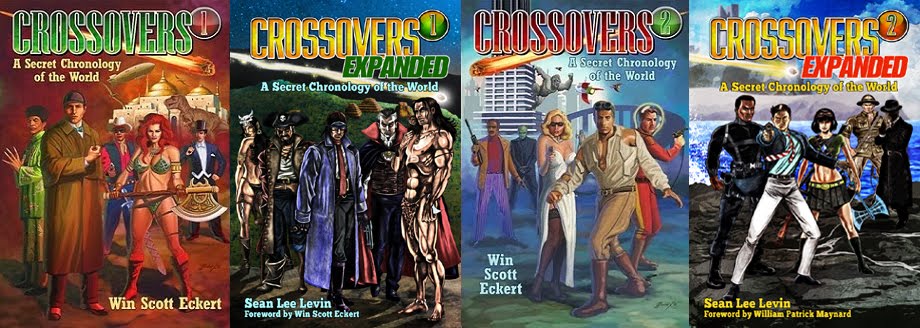
This crossover writeup is one of hundreds included in my book Crossovers Expanded: A Secret Chronology of the World Volume 3, which will be published by Meteor House! All three volumes are AUTHORIZED companions to Win Scott Eckert's Crossovers: A Secret Chronology of the World Volumes 1 and 2! 

Sunday, November 26, 2023

Crossover of the Week

Summer 1888

THE CASE OF MRS. NORTON 

The former Irene Adler hires Erik’s Opera Ghost Agency (whose current operatives are Ayda Heidari, Ysabel de Ferre, and Hagar Stanley) to determine whether her husband Godfrey Norton is the good man he appears. Appearing or mentioned are the Persian; the Countess de Cagliostro; Liddle, Neal, & Liddle; the King of Bohemia; A. J. Raffles; Professor Moriarty; Sherlock Holmes; Trilby; Coppélius; Spallanzani; Olympia; Irma Vep; Les Vampires; La Marmoset; and Mr. Calhoun. 

Story by Kim Newman in Angels of Music, Titan Books, 2016. Erik and the Persian are from Gaston Leroux’s The Phantom of the Opera. Irene Adler, her husband Godfrey Norton, and the King of Bohemia are from Doyle and Watson’s Sherlock Holmes tale “A Scandal in Bohemia.” Ayda Heidari is the future wife of Bob Ferguson from “The Adventure of the Sussex Vampire.” Professor Moriarty is Holmes’ greatest foe. Ysabel de Ferre is a foe of detective Sexton Blake. Hagar Stanley is from Fergus Hume’s Hagar of the Pawn-Shop. Josephine Balsamo, the Countess of Cagliostro, is the archenemy of Maurice Leblanc’s gentleman burglar Arsène Lupin. Liddle, Neal, & Liddle is from Arthur Morrison’s Martin Hewitt story “The Case of Laker, Absconded.” A. J. Raffles is E. W. Hornung’s amateur cracksman. Trilby O’Ferrall is from George du Maurier’s Trilby. Coppélius, Spallanzani, and Olympia are from Jacques Offenbach’s opera Tales of Hoffmann. Irma Vep and Les Vampires are from Louis Feuillade’s silent film serial named for the latter. La Marmoset and Mr. Calhoun are from Albert W. Aiken’s “La Marmoset, the Detective Queen; or, The Lost Heir of Morel.” 

This crossover writeup is one of hundreds included in my book Crossovers Expanded: A Secret Chronology of the World Volume 3, which will be published by Meteor House! All three volumes are AUTHORIZED companions to Win Scott Eckert's Crossovers: A Secret Chronology of the World Volumes 1 and 2!

Sunday, August 20, 2023

Crossover of the Week

Autumn 1940

RED SHAMBHALA 

Jim Anthony battles a Russian villain called Koschei. Appearing or mentioned are: Xonira; the Heart of Fortune; the Bugle; the Globe; the New York Inquirer; Sovereign City; Maple White Land; Richard Upton Pickman’s infamous painting “Subway Accident”; Campalans; the Brainerd punch-card automata; Thunder Jim Wade; Doc Ardan; Hanoi Xan and his World Crime League; the Si-Fan; the Brotherhood of the Golden Chrysanthemum; the Vampires of Paris; the Order of the Cosmic Ram; Commissioner Warner; the Black Bat; the Kingscote School for Girls; St. Trinian’s; and a Freiburg dance academy of dubious reputation. 

Novel by Joshua Reynolds, Pro Se Productions, 2015. Jim Anthony appeared in the pulp magazine Super Detective. Xonira is from Derrick Ferguson’s Dillon series. The Heart of Fortune is the riverboat home and gambling casino of Ferguson’s character Fortune McCall. The Daily Bugle and the Daily Globe are from Marvel’s Spider-Man comics. The New York Inquirer is from the classic film Citizen Kane. Sovereign City is the setting of a book imprint from Pro Se; Fortune McCall is one of the city’s heroes. Maple White Land is from Arthur Conan Doyle and Edward Malone’s The Lost World. Richard Upton Pickman and his painting “Subway Accident” are from H. P. Lovecraft’s “Pickman’s Model.” The fictional cubist painter Jusep Torres Campalans was the subject of a biography by Max Aub. The Brainerd punch-card automata are based on technology invented by Johnny Brainerd in Edward S. Ellis’ The Steam Man of the Prairies. Thunder Jim Wade appeared in stories by “Charles Stoddard” (Henry Kuttner) in the pulp magazine Thrilling Adventures. Doc Ardan is from Guy d’Armen’s Doc Ardan: City of Gold and Lepers. Jean-Marc and Randy Lofficier’s adaptation and translation of that novel implied Ardan was really a famous American pulp hero. Hanoi Xan and the World Crime League are from the movie The Adventures of Buckaroo Banzai Across the 8th Dimension. The Si-Fan is from Sax Rohmer’s Fu Manchu novels. The Brotherhood of the Golden Chrysanthemum is mentioned in several works by Reynolds. The Vampires of Paris are from the serial Les Vampires. The Order of the Cosmic Ram is from Reynolds’ Royal Occultist series. Commissioner Jerome Warner is from the Black Bat stories. The Kingscote School for Girls is from Antonia Forest’s Marlow novels. St. Trinian’s is the setting of a comic strip by Ronald Searle. The Freiburg dance academy is from the movie Suspiria.

This crossover writeup is one of hundreds included in my book Crossovers Expanded: A Secret Chronology of the World Volume 3, which will be published by Meteor House! All three volumes are AUTHORIZED companions to Win Scott Eckert's Crossovers: A Secret Chronology of the World Volumes 1 and 2!

Monday, July 24, 2023

Crossover Cover: The Vampire and the Air Pirate


Are you a fan of silent adventure cinema?

Then you'll love this story to be published in December, which pits Irma Vep from the French serial Les Vampires against Filibus from the Italian film of the same name! I don't remember the author's full name, but I think his last name might be Levin...

For more information, be sure to pick up a copy of my book Crossovers Expanded: A Secret Chronology of the World Volume 3 when Meteor House publishes it! All three volumes are AUTHORIZED companions to Win Scott Eckert's Crossovers: A Secret Chronology of the World Volumes 1 and 2!

Sunday, January 29, 2023

Crossover of the Week

Autumn 1887 LES VAMPIRES DE PARIS Erik’s Angels of Music (La Marmoset, Sophy Kratides and Unorna) investigate a murder that appears to be the work of a vampire. Appearing or mentioned are: Montsou; Sybil Vane; Mr. Calhoun; Harold Latimer; Wilson Kemp; Sherlock Holmes; Paul Kratides; Scapinelli; Keyork Arabian; the power to cloud men’s minds in the mountain lamaseries of Tibet; strange orchids from the mangrove swamps of the Andaman Islands; the Scroll of Thoth; the Shout; Irene Adler; Trilby O’Ferrall; Christine Daaé; Olympia; Svengali; the Persian; Les Vampires; the Grand Vampire; Vénénos; the Hôtel du Libre Echange; Monsieur Morillon; Frederick Hohner; Ayda Heidari; Count Camille de Rosillon; Pontevedro; Dr. Geneviève Dieudonné; Inspector Raoul d’Aubert; the Black Coats; Sesostris, the Sorceress of Ecbatana; the lost treasure of Monte Cristo; Anatole Garron; Giovanni Jones; Monsieur Rémy; Dorabella; Clarimonde; Geraldine; the Count; Des Esseintes; the Marquis de Coulteray; Joséphine Balsamo; Gravelle; Dr. Michel Falke; Mircalla Karnstein; Abraham Van Helsing; the Princess Addhema; Firmin Richard; Jean Macquart; Simon Buquet; Bernard Hichcock; Patou; Inspecteur Legris; Monsieur Moncharmin; Jacques Rival; Henri Paillardin; Lord Ruthven; Sir Francis Varney; Ezzelin von Klatka; Inspecteur Bec; Chief Magistrate Barrière; and John Seward. Story by Kim Newman in Angels of Music, Titan Books, 2016. Erik, Christine Daaé, the Persian, Monsieur Rémy, Firmin Richard, and Armand Moncharmin are from Gaston Leroux’s The Phantom of the Opera. La Marmoset and Mr. Calhoun are from Albert W. Aiken’s story “La Marmoset, the Detective Queen; or, the Lost Heir of Morel.” Sophy Kratides and her brother Paul, Harold Latimer, and Wilson Kemp are from Doyle and Watson’s Sherlock Holmes tale “The Adventure of the Greek Interpreter.” Irene Adler is from the Holmes story “A Scandal in Bohemia.” Ayda Heidari will later marry Bob Ferguson, as seen in “The Adventure of the Sussex Vampire.” Unorna and Keyork Arabian are from F. Marion Crawford’s The Witch of Prague. Montsou is from Émile Zola’s novel Germinal. Jean Macquart is from Zola’s La Terre. Sybil Vane is from Oscar Wilde’s The Picture of Dorian Gray. Scapinelli is from the movie The Student of Prague. The power to cloud men’s minds was learned in Tibet by the shadowy vigilante. Strange orchids from the mangrove swamps of the Andaman Islands are from H. G. Wells’ “The Flowering of the Strange Orchid.” The Scroll of Thoth is from the 1932 film The Mummy. The Shout is from the British horror film of the same name. Trilby O’Ferrall and Svengali are from George du Maurier’s Trilby. Olympia is from Jacques Offenbach’s opera Tales of Hoffmann. Les Vampires, the Grand Vampire, and Vénénos are from the film serial Les Vampires. The Hôtel du Libre Echange is from Georges Feydeau and Maurice Desvallières’ play of the same name, as are Bastien Morillon and Henri Paillardin. Frederick Hohner is from the movie The Climax. Count Camille de Rosillon and Pontevedro are from Franz Lehár’s operetta The Merry Widow. Geneviève Dieudonné is from Newman’s Diogenes Club series and has a counterpart in the Anno Dracula Universe. Inspector Raoul d'Aubert and Anatole Garron are from the 1943 film version of The Phantom of the Opera. Simon Buquet is from the 1925 silent version of the novel. The Black Coats are from Paul Féval’s novels. The Princess Addhema is from Féval’s The Vampire Countess. Sesostris, the Sorceress of Ecbatana is from Aldous Huxley’s Crome Yellow. The lost treasure of Monte Cristo is from Alexandre Dumas’ The Count of Monte Cristo. Giovanni Jones is from the Bugs Bunny cartoon “Long-Haired Hair”; this must be his CU counterpart. Dorabella is the title character of an episode of the 1970s British television series Supernatural. Clarimonde is from Théophile Gautier’s “La Morte Amoureuse.” Geraldine is from Samuel Taylor Coleridge’s poem “Christabel.” Here, the three female vampires are the Brides of Count Dracula. This story takes place during the events of Stoker’s novel. Abraham Van Helsing and John Seward are from Dracula. Professor Madame Saartje Van Helsing must be Abraham’s second wife; his first, Elizabeth, died in circumstances recounted in the Marvel Comics black-and-white magazine Dracula Lives! Jean des Esseintes is from J.-K. Huysmans’ A Rebours. The Marquis de Coulteray is from Gaston Leroux’s The Bloody Puppet. Joséphine Balsamo is from Maurice Leblanc’s Arsène Lupin novels. Gravelle is from the movie Charlie Chan at the Opera. Dr. Falke is from Johann Strauss II’s operetta Die Fledermaus. The first name Michel is derived from the 1946 film version of the operetta. Mircalla Karnstein is from J. Sheridan Le Fanu’s “Carmilla.” Bernard Hichcock is from the movie The Horrible Dr. Hichcock. Patou, a gendarme, is an ancestor of gendarme Nestor Patou from Marguerite Monnot and Alexandre Breffort’s musical Irma la Douce. Inspecteur Legris is from the movie The Man Who Could Cheat Death. Jacques Rival is from Guy de Maupassant’s Bel-Ami. Lord Ruthven is from John Polidori’s “The Vampyre.” Sir Francis Varney is from James Malcolm Rymer’s Varney the Vampire. Ezzelin von Klatka is from Anonymous’ story “The Mysterious Stranger.” Inspecteur Bec is from the 1986 TV movie adaptation of Edgar Allan Poe’s “The Murders in the Rue Morgue.” Paul Barrière is from Cole Porter’s musical Can-Can.

This write-up is one of hundreds included in my forthcoming book Crossovers Expanded: A Secret Chronology of the World Volume 3, which will be published by the fine folks at Meteor House! All three volumes are AUTHORIZED companions to Win Scott Eckert's books Crossovers: A Secret Chronology of the World Volumes 1 and 2!

Sunday, May 8, 2016

Crossover of the Week

Early January 1891
THE GREEK INVERTEBRATE
Professor Moriarty and Colonel Moran are asked by the Professor’s brother, Colonel James Moriarty, to ignore a summons from the third Moriarty brother, stationmaster James. The Professor and Moran defy his orders, and become involved with espionage and a new machine with which to wage war. Appearing or mentioned are: Sir Augustus Moran; the Club of the Damned; the Mausoleum Club; a chandelier falling on the audience of the Paris Opera during the jewel song from Faust; Fal Vale Junction; Greyfriars; the kuripuri; the Grand Vampire; Les Vampires; a German rival of Moriarty’s who sometimes assumes the guise of “a shock-haired, stooped alienist with mesmeric eyes”; Irma Vep; Palliser; Nevil Airey Stent; Fred Porlock; the Lord of Strange Deaths; R. G. Sanders; Eduardo Lucas; Thomas Carnacki; Cursitor Doone; Monsieur Sabin; Ilse von Hoffmansthal, aka Madame Gabrielle Valladon; Flaxman Low; Hugo Oberstein; Sophy Kratides; Malilella of the Stiletto; Irene Adler; Lady Yuki Kashima; Mad Margaret Trelawny; Dr. Syn; Partington; Paul Finglemore, alias Colonel Clay; and Ram Singh.
Short story by Colonel Sebastian Moran, edited by Kim Newman in Professor Moriarty: The Hound of the d’Urbervilles, Titan Books, 2011. Professor Moriarty, Colonel Moran, and Irene Adler are from Doyle and Watson’s Sherlock Holmes stories. Colonel Moriarty is mentioned in “The Final Problem.” Stationmaster Moriarty and Fred Porlock are from The Valley of Fear. Sir Augustus Moran, the Colonel’s father, is mentioned in “The Adventure of the Empty House.” Eduardo Lucas is from the Holmes story “The Adventure of the Second Stain”; since Lucas died in that story, which Baring-Gould has dated to October 1886, the Lucas in Newman’s story must be a cousin of Doyle’s character who is also involved in espionage. Hugo Oberstein is mentioned in both “The Adventure of the Second Stain” and “The Adventure of the Bruce-Partington Plans,” which is also the source of Partington. Sophy Kratides is from the Holmes tale “The Adventure of the Greek Interpreter.” The Club of the Damned is from the 1970s British television series Supernatural. The Mausoleum Club is from the 1980s BBC radio comedy series Tales from the Mausoleum Club. The chandelier falling on the audience of the Paris Opera during the jewel song from Faust is a reference to The Phantom of the Opera by Gaston Leroux. Fal Vale Junction is from Arnold Ridley’s play The Ghost Train. Greyfriars is the school attended by Billy Bunter in stories written by Charles Hamilton under the pen name Frank Richards. The kuripuri (originally spelled curupuri) is from Doyle’s novel The Lost World. Les Vampires are from Louis Feuillade’s film serial of the same name, as are their leader, the Grand Vampire, and Irma Vep. This Grand Vampire’s predecessor, who appeared in “The Adventure of the Six Maledictions,” must be the one murdered by Erik, the Phantom of the Opera, in 1889, as mentioned in Josh Reynolds’ Phileas Fogg and the War of Shadows. Rick Lai’s “All Predators Great and Small” has Irma as a child in 1895; perhaps the alias “Irma Vep” is used by whoever serves as Les Vampires’ primary female operative at any given time. This is likely the same Irma seen in Phileas Fogg and the War of Shadows. Moriarty’s German rival is Dr. Mabuse, the master criminal who appeared in fiction by Norbert Jacques and three films directed by Fritz Lang. Palliser is Plantagenet Palliser, the protagonist of a series of novels by Anthony Trollope. The Palliser novels are connected to the Chronicles of Barsetshire series, as well as several non-series novels by Trollope. Stent is from H. G. Wells’ The War of the Worlds. The Lord of Strange Deaths is Fu Manchu. R. G. Sanders is Edgar Wallace’s Sanders of the River. Sanders and another of Wallace’s characters, Lieutenant Bones, appear in each other’s series. Thomas Carnacki, “the Ghost-Finder,” was created by William Hope Hodgson. Cursitor Doone’s name is meant to evoke the British comic book character Cursitor Doom. Monsieur Sabin is from E. Phillips Oppenheim’s novels Mysterious Mister Sabin and The Yellow Crayon. Ilse Von Hoffmansthal (originally spelled without the second “h”), aka Gabrielle Valladon, is from Billy Wilder’s film The Private Life of Sherlock Holmes. Flaxman Low is from the collection Ghosts; Being the Experiences of Flaxman Low, by “E. and H. Heron” (Hesketh V. Prichard and Kate O’Brien Ryall Prichard). Malilella (usually spelled without the second “l”) is from Ermanno Wolf-Ferrari’s opera The Jewels of the Madonna. Lady Yuki Kashima is better known as the title character of Kazuo Koike and Kazuo Kamimura’s manga Lady Snowblood. Margaret Trelawny is from Bram Stoker’s The Jewel of Seven Stars. Dr. Syn is from novels by Russell Thorndike. Paul Finglemore, aka Colonel Clay, is from Grant Allen’s An African Millionaire. Ram Singh is from the film Sherlock Holmes and the Secret Weapon. Several details given about the Moriarty family in this story contradict their established CU history: the Colonel is younger than the Professor, the father of all three brothers was named James, and the Professor implicitly killed his own parents. Moriarty must have had an ulterior motive for lying to Moran.

Sunday, March 20, 2016

Crossover of the Week

Early January 1891
THE GREEK INVERTEBRATE
Professor Moriarty and Colonel Moran are asked by the Professor’s brother, Colonel James Moriarty, to ignore a summons from the third Moriarty brother, stationmaster James. The Professor and Moran defy his orders, and become involved with espionage and a new machine with which to wage war. Appearing or mentioned are: Sir Augustus Moran; the Club of the Damned; the Mausoleum Club; a chandelier falling on the audience of the Paris Opera during the jewel song from Faust; Fal Vale Junction; Greyfriars; the kuripuri; the Grand Vampire; Les Vampires; a German rival of Moriarty’s who sometimes assumes the guise of “a shock-haired, stooped alienist with mesmeric eyes”; Irma Vep; Palliser; Nevil Airey Stent; Fred Porlock; the Lord of Strange Deaths; R. G. Sanders; Eduardo Lucas; Thomas Carnacki; Cursitor Doone; Monsieur Sabin; Ilse von Hoffmansthal, aka Madame Gabrielle Valladon; Flaxman Low; Hugo Oberstein; Sophy Kratides; Malilella of the Stiletto; Irene Adler; Lady Yuki Kashima; Mad Margaret Trelawny; Dr. Syn; Partington; Paul Finglemore, alias Colonel Clay; and Ram Singh.
Short story by Colonel Sebastian Moran, edited by Kim Newman in Professor Moriarty: The Hound of the d’Urbervilles, Titan Books, 2011. Professor Moriarty, Colonel Moran, and Irene Adler are from Doyle and Watson’s Sherlock Holmes stories. Colonel Moriarty is mentioned in “The Final Problem.” Stationmaster Moriarty and Fred Porlock are from The Valley of Fear. Sir Augustus Moran, the Colonel’s father, is mentioned in “The Adventure of the Empty House.” Eduardo Lucas is from the Holmes story “The Adventure of the Second Stain”; since Lucas died in that story, which Baring-Gould has dated to October 1886, the Lucas in Newman’s story must be a cousin of Doyle’s character who is also involved in espionage. Hugo Oberstein is mentioned in both “The Adventure of the Second Stain” and “The Adventure of the Bruce-Partington Plans,” which is also the source of Partington. Sophy Kratides is from the Holmes tale “The Adventure of the Greek Interpreter.” The Club of the Damned is from the 1970s British television series Supernatural. The Mausoleum Club is from the 1980s BBC radio comedy series Tales from the Mausoleum Club. The chandelier falling on the audience of the Paris Opera during the jewel song from Faust is a reference to The Phantom of the Opera by Gaston Leroux. Fal Vale Junction is from Arnold Ridley’s play The Ghost Train. Greyfriars is the school attended by Billy Bunter in stories written by Charles Hamilton under the pen name Frank Richards. The kuripuri (originally spelled curupuri) is from Doyle’s novel The Lost World. Les Vampires are from Louis Feuillade’s film serial of the same name, as are their leader, the Grand Vampire, and Irma Vep. This Grand Vampire’s predecessor, who appeared in “The Adventure of the Six Maledictions,” must be the one murdered by Erik, the Phantom of the Opera, in 1889, as mentioned in Josh Reynolds’ Phileas Fogg and the War of Shadows. Rick Lai’s “All Predators Great and Small” has Irma as a child in 1895; perhaps the alias “Irma Vep” is used by whoever serves as Les Vampires’ primary female operative at any given time. This is likely the same Irma seen in Phileas Fogg and the War of Shadows. Moriarty’s German rival is Dr. Mabuse, the master criminal who appeared in fiction by Norbert Jacques and three films directed by Fritz Lang. Palliser is Plantagenet Palliser, the protagonist of a series of novels by Anthony Trollope. The Palliser novels are connected to the Chronicles of Barsetshire series, as well as several non-series novels by Trollope. Stent is from H. G. Wells’ The War of the Worlds. The Lord of Strange Deaths is Fu Manchu. R. G. Sanders is Edgar Wallace’s Sanders of the River. Sanders and another of Wallace’s characters, Lieutenant Bones, appear in each other’s series. Thomas Carnacki, “the Ghost-Finder,” was created by William Hope Hodgson. Cursitor Doone’s name is meant to evoke the British comic book character Cursitor Doom. Monsieur Sabin is from E. Phillips Oppenheim’s novels Mysterious Mister Sabin and The Yellow Crayon. Ilse Von Hoffmansthal (originally spelled without the second “h”), aka Gabrielle Valladon, is from Billy Wilder’s film The Private Life of Sherlock Holmes. Flaxman Low is from the collection Ghosts; Being the Experiences of Flaxman Low, by “E. and H. Heron” (Hesketh V. Prichard and Kate O’Brien Ryall Prichard). Malilella (usually spelled without the second “l”) is from Ermanno Wolf-Ferrari’s opera The Jewels of the Madonna. Lady Yuki Kashima is better known as the title character of Kazuo Koike and Kazuo Kamimura’s manga Lady Snowblood. Margaret Trelawny is from Bram Stoker’s The Jewel of Seven Stars. Dr. Syn is from novels by Russell Thorndike. Paul Finglemore, aka Colonel Clay, is from Grant Allen’s An African Millionaire. Ram Singh is from the film Sherlock Holmes and the Secret Weapon. Several details given about the Moriarty family in this story contradict their established CU history: the Colonel is younger than the Professor, the father of all three brothers was named James, and the Professor implicitly killed his own parents. Moriarty must have had an ulterior motive for lying to Moran.

Sunday, December 6, 2015

Crossover of the Week

Autumn 1888
THE ADVENTURE OF THE SIX MALEDICTIONS
Professor Moriarty and Colonel Moran are hired by Major Humphrey “Mad” Carew to protect him from the mi-go, which seek to retrieve the gem known as the Green Eye of the Little Yellow God from him. Moriarty’s plan involves hiring a group of master thieves to steal similar cursed items. Appearing or mentioned are: Ted Baldwin; the Vermissa Valley Scowrers; Birdy Edwards, aka John McMurdo and John Douglas; Birlstone Manor; the Assassination Bureau, Ltd.; “that Limehouse Chinese with the marmoset”; the Moonstone; the Eye of Klesh; the All-Seeing Eye of the Goddess of Light; the Crimson Gem of Cyttorak; the Pink Diamond of Lugash; Lukundoo; a Zuni fetish; “a naked Porroh man”; the Barlow rubies; the Rosenthall diamonds; the Mirror of Portugal; the Agra treasure; Azathoth; Tabanga; St. Custard’s; Amaryllis Framington; Giles Conover; the Ingestre Necklace; Mrs. Lovett’s Fleet Street pie shop; the Herncastle Heirloom; the Black Pearl of the Borgias; the Hoxton Creeper; “the cricketing ponce”; the Falcon of the Knights of St. John; the Jewels of the Madonna of Naples; the Jewel of Seven Stars; the Eye of Balor; Simon Carne; Fat Kaspar; the Grand Vampire; Les Vampires; Abel Trelawny; Margaret Trelawny; Gennaro; King Brian of the Leprechauns; Bianca Castafiore; Alf Bassick; Don Rafaele Corbucci; Irene Adler; “Dynamite” Desmond Mountmain and his son Tyrone; Malvoisin’s Mirror; the Monkey’s Paw; Cap’n Flint’s treasure; Sir Michael Sinclair’s Door; Marshall Alaric Molina de Marnac; Vokins; Malilella; Henry Wilcox; Queen Tera; Mrs. Sarah “The Black Widow of Lauder” Stewart; and Hagar “Thieving Pikey” Stanley.
Short story by Colonel Sebastian Moran, edited by Kim Newman in Gaslight Arcanum: Uncanny Tales of Sherlock Holmes, J. R. Campbell and Charles Prepolec, eds., EDGE Science Fiction and Fantasy Publishing, 2011; reprinted and revised in Professor Moriarty: The Hound of the d’Urbervilles, Titan Books, 2011. Professor Moriarty, Colonel Moran, and Irene Adler are from the Sherlock Holmes stories. Ted Baldwin, the Vermissa Valley Scowrers, Birdy Edwards, and Birlstone Manor are from the Holmes novel The Valley of Fear. The Agra treasure is from the Holmes novel The Sign of Four. The Black Pearl of the Borgias is from the Holmes story “The Adventure of the Six Napoleons.” In “The Adventure of the Empty House,” Holmes states “the death of Mrs. Stewart, of Lauder, in 1887” was likely perpetrated by Moran. Mad Carew, the Green Eye of the Little Yellow God and Amaryllis Framington are from J. Milton Hayes’ poem “The Green Eye of the Little Yellow God,” although in the poem Amaryllis is only identified as “the Colonel’s daughter.” Azathoth is one of the Great Old Ones from H. P. Lovecraft’s Cthulhu Mythos. The mi-go are also from the Mythos. The Assassination Bureau, Ltd. is a novel by Jack London, completed posthumously by Robert L. Fish. “That Limehouse Chinese with the marmoset” is Dr. Fu Manchu. The Moonstone (aka the Herncastle Heirloom) is the subject of a novel by Wilkie Collins. The Eye of Klesh is from Lord Dunsany’s one-act melodrama A Night at an Inn. The All-Seeing Eye of the Goddess of Light is from the 1940 film The Thief of Bagdad. The Crimson Gem of Cyttorak is from the exploits of Marvel Comics’ Doctor Strange. Although the gem is best known as the power source of the X-Men villain Juggernaut, it is unlikely it empowered Cain Marko in the CU. The Pink Diamond of Lugash is better known as the Pink Panther, from the film series of the same name. Lukundoo is from the short story of the same name by Edward Lucas White. The Zuni fetish is from Richard Matheson’s story “Prey,” later adapted as “Amelia,” the third segment of the made-for-television film Trilogy of Terror. The “naked Porroh man” is from H. G. Wells’ story “Pollock and the Porroh Man.” The Barlow rubies are from Patrick Hamilton’s play Gas Light. “The cricketing ponce” is E. W. Hornung’s Raffles. The Rosenthall diamonds are from the Raffles story “A Costume Piece.” Don Rafaele Corbucci is Raffles’ nemesis Count Corbucci from “The Fate of Faustina” and “The Last Laugh.” Rick Lai gives the Count the first name Salvatore in his own fiction. Perhaps his full name is Salvatore Rafaele Corbucci. The Mirror of Portugal is from Arthur Morrison’s story “The Case of ‘The Mirror of Portugal,’” found in the collection The Dorrington Deed Box. Tabanga is from the film From Hell It Came. St. Custard’s is the school attended by Nigel Molesworth in books written by Geoffrey Willans and illustrated by Ronald Searle. Giles Conover and the Hoxton Creeper are from the Sherlock Holmes film The Pearl of Death. The Creeper was played by Rondo Hatton, who also portrayed a character called the Creeper in the films House of Horrors and The Brute Man; perhaps the latter-day Creeper is a descendant of his Victorian namesake and look-alike. The Ingestre Necklace and Mrs. Lovett’s Fleet Street pie shop are from the penny dreadful story “The String of Pearls: A Romance,” which formed the basis for the stage musical Sweeney Todd: The Demon Barber of Fleet Street. The Falcon of the Knights of St. John is the titular statue from Dashiell Hammett’s novel The Maltese Falcon; Fat Kaspar is Casper Gutman. The Jewels of the Madonna of Naples, Genarro, and Malilella (usually spelled without the second “l”) are from Ermanno Wolf-Ferrari’s opera The Jewels of the Madonna. The Jewel of Seven Stars, Abel Trelawny, Margaret Trelawny, and Queen Tera are from the novel The Jewel of Seven Stars by Bram Stoker. The Eye of Balor is from Celtic mythology. Simon Carne is from the collection A Prince of Swindlers by Guy Boothby. The Grand Vampire and Les Vampires are from Louis Feuillade’s serial named for the latter. King Brian of the Leprechauns is Brian Connors from the film Darby O’Gill and the Little People. Bianca Castafiore is from the Tintin comics by Hergé. Alf Bassick is from William Gillette’s play Sherlock Holmes. Desmond and Tyrone Mountmain are undoubtedly relatives of the Mountmain family which appears in Newman’s serial novel Seven Stars. Malvoisin’s Mirror is from a titular story by Chris Lowder and Brian Lewis in the British comic magazine Halls of Horror #12. The Monkey’s Paw is the subject of the short story of the same name by W. W. Jacobs. Cap’n Flint’s treasure is from Treasure Island by Robert Louis Stevenson. Sir Michael Sinclair’s Door is from “The Door,” a segment of the British horror anthology film From Beyond the Grave. Marshall Alaric Molina de Marnac is likely a descendant of Alaric de Marnac, the 15th century warlock played by Paul Naschy (née Jacinto Molina Álvarez) in the films Horror from the Tomb and Cries of Terror. Vokins is Charles Vokins from “The Horizontal Witness,” an episode of the television series Cribb, based on Peter Lovesey’s series of novels about a Victorian era Police Sergeant. Henry Wilcox is from E. M. Forster’s novel Howards End. Hagar Stanley is from the collection Hagar of the Pawn-Shop: The Gypsy Detective by Fergus Hume. The original version of this tale had references to the Emeralds of Suliman (from Edgar Wallace’s J. G. Reeder tale “The Green Mamba”) and Sylvia Marsh (from Ken Russell’s 1988 film version of Bram Stoker’s The Lair of the White Worm).

Sunday, November 8, 2015

Crossover of the Week

Early January–May 4, 1891
THE PROBLEM OF THE FINAL ADVENTURE
Colonel Sebastian Moran recounts the events leading to Professor Moriarty’s battle with Sherlock Holmes at the Reichenbach Falls. Appearing or mentioned are: Watson; Colonel Moriarty; the third James Moriarty; “an Irish spinster scribbler”; the Fat Man of Whitehall; the Diogenes Club; Billy the Page; Charlie Vokins; Lestrade; Mackenzie; MacDonald; Simon Carne; the Ranee of Ranchipur; the Lord of Strange Deaths; Fal Vale; Sophy Kratides; Harold Latimer and Wilson Kemp; Charles Milverton; Dan Levy; Les Vampires; the Grand Vampire; Irma Vep; Kingstead Cemetery; La Castafiore; Thomas Carnacki; Van Helsing; Bulstrode & Sons; Baron Maupertuis; quap; Mr. Beebe; the Daughter of the Dragon; Doctor Nikola; Madame Sara; Margaret Trelawny; the Hoxton Creeper; Doctor Mabuse; Alraune ten Brincken; Arthur Raffles and Bunny Manders; Théophraste Lupin and Joséphine Balsamo, Countess Cagliostro; Doctor Jack Quartz and Princess Zanoni; Rupert of Hentzau; Irene Adler; the Si-Fan; Queen Tera; the Jewel of Seven Stars; the Black Pearl of the Borgias; the Duke of Shires; Dr. Syn; Barchester Cathedral; the Forsyte tomb; Colonel Clay; Jim Lassiter; Diggory Venn; Sir Augustus Moran; Von Herder; a skull-faced “ghost” in the khanum’s palace at Mazenderan; Parker; the Reverend John Jago; the Mountmains; Colonel Sapt; Princess Flavia; Birdy Edwards; Grimesby Roylott; John Clay; Bert Stevens; Fred Porlock; Birlstone Manor; Paul Kratides; Ruritania; Rudi; Michael; Rassendyll; The Englischer Hof; and Peter Steiler. The endnotes to the story reveal Kate Reed ghosted for her friend and later lover, Charles Beauregard, and the Diogenes Club traded as Universal Exports in the 1950s. Paul Forrestier is mentioned in the same endnote.
Short story by Colonel Sebastian Moran, edited by Kim Newman in Professor Moriarty: The Hound of the d’Urbervilles, Titan Books, 2011. Moriarty, Moran, Holmes, Watson, the Fat Man of Whitehall (Sherlock’s brother Mycroft), the Diogenes Club, Billy the Page, and Lestrade are from the Sherlock Holmes stories. Further references from the Holmes stories: Colonel Moriarty, Inspector Patterson, the Englischer Hof, and Peter Steiler from “The Final Problem”; the third James Moriarty (the stationmaster, later known as the second Professor Moriarty), MacDonald, Birdy Edwards, Fred Porlock, and Birlstone Manor from The Valley of Fear; Sophy Kratides, Harold Latimer, Wilson Kemp, and Paul Kratides from “The Adventure of the Greek Interpreter”; Charles Milverton from “The Adventure of Charles Augustus Milverton”; Baron Maupertuis, mentioned in “The Adventure of the Reigate Squire”; the Black Pearl of the Borgias from “The Adventure of the Six Napoleons”; Sir Augustus Moran, Von Herder, and Parker from “The Adventure of the Empty House”; Grimesby Roylott from “The Adventure of the Speckled Band”; John Clay from “The Adventure of the Red-Headed League”; and Bert Stevens from “The Adventure of the Norwood Builder.” Moran’s claim he shot Moriarty as the latter grappled with Holmes at Reichenbach must be considered spurious; Holmes would surely have noticed, and The League of Extraordinary Gentlemen depicts Moran and Campion Bond tending to Moriarty after his plunge down the falls. Moran must have lied to conceal the fact the Professor survived his painful fall. The “Irish spinster scribbler” is Kate Reed, a “deleted” character from Dracula who appears in several stories by Newman, and also has a counterpart in the Anno Dracula Universe. Charlie Vokins is from “The Horizontal Witness,” an episode of the television series Cribb. Arthur Raffles, Bunny Manders, and Mackenzie are from the Raffles stories by E. W. Hornung. Dan Levy is from the novel Mr. Justice Raffles. Given that Philip José Farmer identified Raffles as the father of Arthur Upfield’s Inspector Napoleon Bonaparte, Moran and Sophy must be mistaken about Raffles and Bunny’s sexual orientation. Simon Carne is from Guy Boothby’s collection of stories A Prince of Swindlers. Ranchipur is from the film The Rains of Ranchipur. The Lord of Strange Deaths is Fu Manchu; the Si-Fan is the criminal organization Fu Manchu runs. The Daughter of the Dragon is presumably meant to be Fu Manchu’s daughter, Fah Lo Suee; however, this conflicts with Fah’s established birthdate of 1896. Fu must have had another daughter before Fah Lo Suee. Fal Vale is from Arnold Ridley’s play The Ghost Train. Les Vampires, the Grand Vampire, and Irma Vep are from Louis Feuillade’s serial Les Vampires. Kingstead Cemetery and Van Helsing are from Stoker’s Dracula. La Castafiore is Bianca Castafiore from Hergé’s Tintin comics. Thomas Carnacki, “the Ghost-Finder,” was created by William Hope Hodgson. Bulstrode & Sons is a reference to the British sitcom That’s Your Funeral. Quap is a radioactive compound from H. G. Wells’ novel Tono-Bungay. Mr. Beebe is from E. M. Forster’s novel A Room with a View. Doctor Nikola is the master criminal created by Guy Boothby. Madame Sara is from L. T. Meade and Robert Eustace’s The Sorceress of the Strand. Rick Lai has identified Madame Sara as the mother of Miss Warrender from Doyle’s short story “Uncle Jeremy’s Household” in his own fiction, and therefore Moran is wrong about Sara’s sexuality as well as Raffles and Bunny’s. Margaret Trelawny, Queen Tera, and the Jewel of Seven Stars are from Bram Stoker’s The Jewel of Seven Stars. The Hoxton Creeper is from the Sherlock Holmes film The Pearl of Death. Doctor Mabuse is the subject of fiction by Norbert Jacques, as well as a film trilogy by Fritz Lang. Alraune ten Brincken is from the novel Alraune by Hanns Heinz Ewers. Théophraste Lupin is the father of Maurice Leblanc’s gentleman thief Arsène Lupin, while Joséphine Balsamo is Arsène’s future nemesis. Doctor Jack Quartz and Princess Zanoni are foes of dime novel detective Nick Carter. Rupert of Hentzau, Colonel Sapt, Princess Flavia, Ruritania, Rudi (Rudolf V), Michael (Black Michael), and Rassendyll (Rudolf Rassendyll) are from The Prisoner of Zenda and Rupert of Hentzau by Anthony Hope. The Duke of Shires is from the Sherlock Holmes film A Study in Terror. Dr. Syn, aka the Scarecrow of Romney Marsh and Captain Clegg, is from the series of novels by Russell Thorndike. Barchester Cathedral is from Anthony Trollope’s Chronicles of Barsetshire novels. The Forsyte Saga is a series of novels by John Galsworthy. Colonel Clay is from the novel An African Millionaire by Grant Allen. Jim Lassiter is from Zane Grey’s novel Riders of the Purple Sage. Diggory Venn is from Thomas Hardy’s The Return of the Native. The skull-faced “ghost” in the khanum’s palace at Mazenderan is the Phantom of the Opera, from the novel by Gaston Leroux. The Reverend John Jago is an ancestor of Anthony Jago from Newman’s novel Jago, and also has a counterpart in the Anno Dracula Universe. Paul Forrestier is also from Jago. The Mountmains are likely kin to the Mountmains who appear in Newman’s Seven Stars. Charles Beauregard is from Newman’s Diogenes Club stories, and has a counterpart in the Anno Dracula Universe. In Billy Wilder’s film The Private Life of Sherlock Holmes, the Diogenes Club was portrayed as a front for the British Secret Service, a theory Newman has adopted for his own fiction; here, it is revealed the Club eventually became Universal Exports, the front for the BSS in Ian Fleming’s James Bond novels. However, the BSS must have still privately used the Club’s name at times, as demonstrated by Richard Jeperson’s exploits.

Sunday, October 18, 2015

Crossover of the Week

1899
FIRST STEPS
Seeking a use for his newfound powers, Leo Saint-Clair begins debunking mediums alongside his friend Robert Champeau. He attends a séance held by the Prillants. Among those in attendance are the Baldwins and the pregnant Mrs. Anne Jones and her chaperone, Ms. Loveday Brooke. The medium is Simon Orne, who conjures a demonic being. Leo later discovers another attendee at the séance was Lily Flowers, a member of the gang called the Vampires. Leo and Robert meet the Sâr Dubnotal, who reveals Orne summoned the creature, Baal, using a page from the Necronomicon. Inspector Milfroid accompanies Leo to another séance in order to arrest Orne.
Short story by Travis Hiltz in Night of the Nyctalope, Jean-Marc and Randy Lofficier, eds., Black Coat Press, 2012; reprinted in French in Les Compagnons de l’Ombre (Tome 11), Jean-Marc and Randy Lofficier, eds., Rivière Blanche, 2013. Leo Saint-Clair, aka the Nyctalope, is a hero in novels by Jean de La Hire. Robert Champeau and the Prillants are also from the Nyctalope stories. The Baldwins, Lily Flowers, and the Vampires are from Louis Feuillade’s serial Les Vampires. Anne (or Anna) Jones is the mother of noted archaeologist Dr. Henry “Indiana” Jones, Jr. Since Indiana Jones was born in 1899, the date of 1900 assigned to this story must be incorrect. Loveday Brooke is from The Experiences of Loveday Brooke, Lady Detective by Catherine Louisa Pirkis. Simon Orne is from Lovecraft’s The Case of Charles Dexter Ward. The Necronomicon is a mainstay of Lovecraft’s Cthulhu Mythos. The Sâr Dubnotal appeared in his own self-titled pulp magazine penned by an anonymous author (possibly Norbert Sévestre). Baal is from the novel of the same name by Renée Dunan. Inspector Milfroid is from Gaston Leroux’s The Phantom of the Opera.

Sunday, February 8, 2015

Crossover of the Week


1911
THE LEGACY OF ARSÈNE LUPIN
            Arsène Lupin, disguised as Prince Sernine, tells his biographer Maurice Leblanc a tale involving the Comte de Guy’s ownership of d’Artagnan’s sword, having heard rumors of how the Comte acquired it: “There’s been talk of dealings with the Chinese fence, Hanoi Shan—his path has crossed Lupin’s before—rumors of a murderous thug named Gurn…half-whispered rumors of Cagliostro, Saint-Germain, and the Englishman Barrington, who had defrauded the great Cagliostro of a fortune and the sword; talk that the sword had once been the trust of one Prince Rodolphe; that it was stolen by Colonel Bozzo-Corona or by that young rogue Rocambole; that British cracksman took a shot at it; and there was a suggestion the Devil Doctor in Limehouse had shown an interest; Josephine Balsamo’s name came up…” The sword was brought to Lupin’s attention by the young journalist Rouletabille. The Comte asks Lupin, in his guise as M. Lenormand, head of the Sûreté Nationale, to guard his valuables at a masked ball. Lupin says, “Even old Lecoq might have found himself challenged by this problem!,” and assures the Comte, “The cracksman Bunn is in Perth, by all accounts, and that Englishman Raffles who has plagued Scotland Yard has not been heard of since the Boer War.” The Comte introduces “Lenormand” to his daughter, the Comtesse Emmeline de Guy. Lupin encounters a young boy who calls himself “Stephen Tarleton” and wishes to steal the sword from the Comte. The Comte stores his valuables in a safe made by the Dale company in New York, which the American called the Gray Seal had remarkable luck in cracking. Marie Antoinette’s necklace was stolen by Cagliostro, then in England by George Barrington, the Picaroon, king of the London underworld, and from the Dreux-Soubize family by Lupin himself, as a boy. Lupin recognizes members of Paris’ infamous Vampires and the Union Corse from Marseilles at the ball, as well as deadly enemies of the English cracksman, Cleek.
            Short story by David L. Vineyard in Tales of the Shadowmen Volume 11: Force Majeure, Jean-Marc and Randy Lofficier, eds., Black Coat Press, 2014. Arsène Lupin, the Dreux-Soubize family, and Josephine Balsamo are from Maurice Leblanc’s novels. The Comte de Guy is one of the many aliases used by Carl Peterson, the archenemy of H.C. “Sapper” McNeile’s adventurer Bulldog Drummond. The Countesse Emmeline is really Carl’s mistress Irma. Hanoi Shan is from H. Ashton-Wolfe’s Warped in the Making: Crimes of Love and Hate. Hanoi Shan encountered Lupin in Vineyard’s story “The Jade Buddha” (Tales of the Shadowmen Volume 5: The Vampires of Paris, Jean-Marc and Randy Lofficier, eds., Black Coat Press, 2009.) Gurn is better known as Marcel Allain and Pierre Souvestre’s villain Fantômas. Count Cagliostro was a historical figure, who also appeared in novels by Alexandre Dumas, and was identified as the founder of a villainous branch of the Wold Newton Family by Philip José Farmer. The Comte de Saint-Germain was also a real person, and has appeared in a number of works of fiction. George Barrington is from Ernest Dudley’s novel Picaroon. Prince Rodolphe is from Eugène Sue’s The Mysteries of Paris. Colonel Bozzo-Corona is the leader of the gang known as the Black Coats in novels by Paul Féval. Rocambole is the villain-turned-hero of novels by Ponson du Terrail. The British cracksman is E.W. Hornung’s A.J. Raffles. The Devil Doctor is Sax Rohmer’s Doctor Fu Manchu, whom Farmer conflated with Hanoi Shan in Doc Savage: His Apocalyptic Life. Apparently, it is not common knowledge that Fu and Shan are the same person, and doubtless that is how the criminal mastermind prefers it. Rouletabille is a young reporter featured in novels by Gaston Leroux. Lecoq is Emile Gaboriau’s detective. Smiler Bunn is a thief appearing in comedic stories by Bertram Atkey. “Stephen Tarleton” is really Simon Templar, who will later be known as the Saint, the “laughing Robin Hood of crime” created by Leslie Charteris. Lupin thinks that Templar is fourteen years old. In fact, Templar would be ten years old in 1911. The Dale company is owned by Jimmie Dale, aka the Gray Seal, who appears in books by Frank L. Packard. The Vampires are from Louis Feuillade’s silent film serial Les Vampires. The Union Corse is a real organization, but a fictionalized version of the group appears in Ian Fleming’s James Bond novel On Her Majesty’s Secret Service. Hamilton Cleek, “the man of forty faces,” was the protagonist of books by Thomas W. Hanshew.

Sunday, December 28, 2014

Crossover of the Week


1808-1810
GODS OF THE UNDERWORLD
            Aubert Lecoq and his sons are imprisoned under the Convent de la Merci alongside Colonel Bozzo-Corona. Their jailer is Marcel Draco, who is planning to kill the Colonel for refusing to share the Treasure of the Black Coats with the rest of the High Council. Draco and his fellow rebels play cards to determine who gets to kill the Colonel; Doctor Lerne wins the game. However, the Colonel manages to escape, and the Lecoqs wind up being rescued. A year later, at the Callyx Bar in Paris, Bibi-Lupin, who has stolen the Empress Joséphine’s necklace, asks Trompe-la-Mort to dispose of it, but he refuses. Joseph Fouché, Napoleon’s Minister of Police, discusses Bibi-Lupin with Jean Henry, the chief of the Paris police. Bibi-Lupin was arrested for treason in 1793 by Citizen Chauvelin, but escaped execution and fled to England, becoming a coachman for Sir Percy Blakeney, who married an actress who was Saint-Just’s cousin. Monsieur Jackal, a former criminal recently recruited as an informer, has assured Henry that Bibi-Lupin acted only out of greed. Anne de Breuil argues with the Colonel, who remarks that Anne inherited her namesake’s beauty. Claude Verdier states that Napoleon betrayed the Colonel. Lawyer Portal-Giraud came up with the Black Coats’ doctrine of “paying the law.” The Colonel declares a toast using a bottle of La Frenaie wine. Trompe-la-Mort murders Verdier, leaving behind the Botte de Nevers, the mark of Lagardère. He forces the Colonel to give him the Scapular of the Black Coats. However, he scratches himself on a replica of a dragon’s fang on the box containing the Scapular, which the Colonel reveals was coated with a poison derived from the black scorpion of India. Trompe-la-Mort is really Jacques Collin, who took the fall for his comrade Franchessini’s forgery. Rather than killing him, the black scorpion poison tossed Collin into a cataleptic state. The Colonel is considering replacing the poison with a Brazilian drug called the “Mato Grosso Pestilence.” At the Colonel’s orders, a man named Toussac whips Collin. Henri de Lagardère learned the Botte de Nevers, invented by the great fencing master Delapalme, from his friend the Duc de Nevers. Anne de Breuil is also known as Jacqueline Collin, Jacques’ aunt. The Collins’ forebear, Milady de Winter, was Cardinal Richelieu’s most accomplished agent. The box containing the Scapular is kept in a concealed wall alcove alongside a book called Les Chroniques de Nemedea. The book features an illustration of a box similar to the one bearing the Scapular alongside an account of a legendary killer who encountered said box. Monsieur Jackal has heard that Trompe-la-Mort is currently infatuated with a youth named Alexis Ladeau. Trompe-la-Mort attempts to convince six fellow convicts who were also betrayed by the Black Coats, including Fil-de-Soie, Le Biffon, and Auguste, that they must band together to defeat the Colonel. After his fellow convicts escape, Trompe-la-Mort plans to recruit more men, including La Pouraille. Trompe-la-Mort dubs this new alliance the Society of the Ten Thousand. Later that night, he decides upon his new alias: Vautrin.
            Short story by Rick Lai in Tales of the Shadowmen Volume 9: La Vie en Noir, Jean-Marc and Randy Lofficier, eds., Black Coat Press, 2012; reprinted in French in Les Compagnons de l’Ombre (Tome 13), Jean-Marc and Randy Lofficier, eds., Rivière Blanche, 2014. Aubert Lecoq is meant to be coachman Albert Lecoq, father of future Black Coats member Lecoq de la Perière and grandfather of Emile Gaboriau’s policeman and sleuth Monsieur Lecoq, from Philip José Farmer’s biography Tarzan Alive. The Convent de la Merci, Colonel Bozzo-Corona, the Black Coats, their Treasure and Scapulary, and Portal-Giraud are featured in the Black Coats novels by Paul Féval. Marcel Draco is an ancestor of Union Corse leader Marc-Ange Draco and his daughter Tracy from Ian Fleming’s James Bond novel On Her Majesty’s Secret Service. Doctor Lerne is an ancestor of the title character of Maurice Renard’s novel Doctor Lerne. Jacques Collin (aka Trompe-la-Mort and Vautrin), Franchessini, Le Biffon, Fil-de-Soie, Auguste, La Pouraille, and the Society of the Ten Thousand are from Honoré de Balzac’s interconnected cycle of novels La Comédie Humaine. The Callyx Bar is from Louis Feuillade’s serial Judex. Bibi-Lupin is also from La Comédie Humaine; here, he is conflated with coachman Louis Lupin from Tarzan Alive, the ancestor of Maurice Leblanc’s gentleman thief Arsène Lupin. Jacqueline Collin, Vautrin’s aunt, also appears in the La Comédie Humaine novels. Here, she is romantically involved with Aubert Lecoq, and conflated with an unidentified beautiful woman who appeared as a member of the Black Coats’ Council in the novel The Cadet Gang, both story elements being based on theories proposed by Jean-Marc Lofficier. Sir Percy Blakeney; his wife, the former Marguerite St. Just; and Citizen Chauvelin are from Baroness Orczy’s Scarlet Pimpernel novels. Monsieur Jackal is from Alexandre Dumas’ The Mohicans of Paris; here, he is conflated with the historical Eugène François Vidocq, reformed criminal turned founder of the French Sûreté. Claude Verdier is an ancestor of Satanas from Louis Feuillade’s silent film serial Les Vampires; in the English language version of the serial, Satanas’ real name is given as Claude Dupont-Verdier. La Frenaie wine is from Clark Ashton Smith’s Averoigne stories. Henri de Lagardère, the Duc de Nevers, the Botte de Nevers, and Delapalme are from Féval’s swashbuckling novel Le Bossu. According to Sax Rohmer’s The Golden Scorpion, the drug F. Katalepsis, used by the Si-Fan, the organization led by Dr. Fu Manchu, has as its chief ingredient the venom of the black scorpion of India. The Mato Grosso Pestilence is from Harold A. Davis’ Doc Savage pulp novel The Green Death. Toussac is the brother of the Toussac that appears in Arthur Conan Doyle’s Uncle Bernac. Robert E. Howard claimed that he learned of the Hyborian Age and the barbarian Conan’s exploits through a tome called The Nemedian Chronicles. Conan encountered a box similar to that containing the Scapular of the Black Coats in The Hour of the Dragon (aka Conan the Conqueror.) Alexis Ladeau is from Howard’s Cthulhu Mythos story “The Black Stone.”